
Introduction
Throughout the 7 Claims Stories series, we have explored the Income Protection claims journey from multiple perspectives, each one offering a window into the realities behind the process. But these stories are not just individual reflections. They represent a much broader picture.
To shape this final chapter, we have summarised the insights and comments from across the Protection world, bringing together experiences from advisers, insurers, and claims professionals working at the heart of the industry every day.
It highlights a clear and consistent message: The Claim is the Product and Claims are not just processes, they are shared experiences, shaped by people, decisions, and collaboration at every stage.
A Journey Built on Relationships
At the centre of every claim is a client who may be vulnerable and is dealing with uncertainty. Across both the stories and the contributions from member firms, one theme stands out strongly: the value of relationships. Firms consistently highlight the role of advisers as a critical support for clients at the point of claim. Where advisers remain actively involved, explaining next steps, managing expectations, and providing reassurance, clients are more confident and the process tends to run more smoothly.
Many firms shared examples where early adviser engagement helped avoid delays, resolved misunderstandings, and improved overall outcomes. This reinforces a simple but powerful point: strong relationships lead to stronger
claims experiences.
Filter

Story 1 examines the role of the adviser when there’s a claim, defining advisers’ responsibilities before and after claims initiation and highlighting how they can help gather evidence to expedite claims and support better outcomes. What our IPTF Claims Workstream Members said…..
- “Several firms have shifted towards more proactive adviser contact during a claim, crediting this with better relationships and faster outcomes”
- “Non-English speakers and language barriers at application stage flagged as an area Advisers can support with”
Getting the Foundations Right
A recurring insight from across the series is that claims success often depends on what happens long before a claim is made. Firms highlighted that:
- Clear, accurate disclosure at application stage is essential
- Clients don’t always fully understand what they are covered for
- Misalignment at the outset can lead to challenges later
Several contributors noted that a significant proportion of claim issues could be reduced through better communication and understanding at point of sale. This presents a clear opportunity for the industry to strengthen the foundations so that claims, when they happen, can proceed with greater clarity and confidence.
Filter

Story 3 – Misrepresentation Matters
Read MoreStory 3 takes a deep dive into one of the most common and costly reasons income protection claims are declined. The IPTF explored this further in our first Industry Conversation – Misrepresentation – understanding the Rise and Resetting the Narrative. What our IPTF Claims Workstream Members said…
- “Seen as the primary driver of declined claims and a growing, not shrinking, real problem.”
- “Strong appetite for continued education: how questions are worded and positioned matters enormously. One member cited reinsurer research showing a 70% increase in disclosure from a small wording tweak, and better disclosure when applicants read the question themselves rather than have it read to them over the phone.”
- “Calls for clearer guidance on remedy: what happens after a “careless” finding (exclusion versus cancellation and refund) and how deliberate/reckless cases are handled on premiums.”
- “Suggestions to highlight repercussions upfront to deter misrepresentation at the point of sale and for more post-sale contact with clients to bridge the sales-to-claim gap.”
- “Fraud, including AI-generated fraudulent documents, flagged as an emerging and under-covered risk.”
Navigating Complexity Together
Income protection claims are rarely straightforward. From interpreting medical evidence to understanding income calculations, there are layers of complexity that can be difficult for clients and sometimes for advisers to fully grasp.
Member firms pointed to communication as the key differentiator. Where explanations are clear, timely, and consistent, clients are far more likely to trust the process. Some firms also shared examples of simplifying communications, introducing clearer documentation, and using more proactive updates to reduce uncertainty.

Story 4 explores how to calculate accurately how much over an IP applicant needs, understanding the calculation used at claim and returning to work – proportionate benefit. What our IPTF Claims Workstream Members said…
- “The financial assessment story was seen as demystifying a complex area for advisers and providers alike.”
- “Over-insurance flagged as a real and growing issue, often from confusing turnover with personal taxable income, undisclosed GIP, or fluctuating self-employed income.”
- “Practical steps already in place or planned by some insurers, such as: Minimum Benefit Guarantees. annual statements showing income needed to qualify for benefit at claim.”
- “Calls for providers to use routine customer contact (e.g. address changes) as a prompt to review cover, and for advisers to request tax returns/accounts at application to reduce over-insurance risk.”
From Claims Management to Client Support
One of the most forward-looking insights from both the stories and firm contributions is the growing focus on rehabilitation. Many member firms shared examples of how early intervention, whether through vocational support, mental health services, or tailored return-to-work plans has significantly improved outcomes for clients.
This reflects a broader shift in mindset. Claims are no longer seen purely as a financial transaction, but as an opportunity to support recovery and long-term wellbeing. As highlighted in broader industry discussions, including the Keep Britain Working review led by Charlie Mayfield, there is an increasing emphasis on supporting individuals to remain in or return to work wherever possible. Firms that have embedded rehabilitation into their approach report:
- Better client outcomes
- Shorter claim durations in some cases
- More positive overall experiences

Story 2 explores the important role of Vocational Rehabilitation support. What our IPTF Claims Workstream Members said…
- “Seen as a genuine win-win when insurers engage vocational rehabilitation providers.”
- “Question raised about whether complexity, and an assumption that work isn’t possible, is a barrier for neurological claims specifically.”
- “Awareness remains low among claimants.”
- “Broader framing: Income Protection increasingly needs to be understood as supporting recovery and return to work, not just income replacement.”
The People Behind the Process
Another important perspective which is often less visible, is the experience of claims professionals themselves. Contributors across member firms spoke about the responsibility of balancing empathy with fairness, and the emotional impact of working closely with complex and sometimes distressing cases. This highlights an important consideration for the industry that supporting claims teams is essential to maintaining both consistency and compassion in decision-making. Investing in training, wellbeing, and resources is not just beneficial internally, it directly influences the quality of outcomes for clients.
Filter
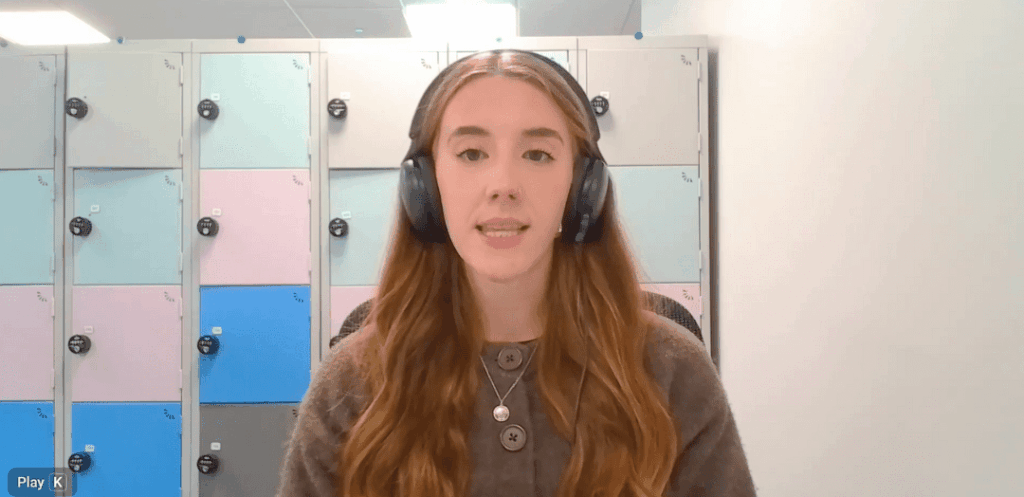
Story 5 highlights the real experiences of protection claims assessors – work that extends far beyond processes and policy wording. What our IPTF Claims Workstream Members said…
- “The “Day in the Life of a Claims Assessor” story landed strongly across multiple contributors as a reminder of the emotional weight of the role and the balance between empathy and fair decision-making.”
- “Reinforces the case for supporting claims teams’ wellbeing and challenging the
misconception that insurers look for reasons not to pay.”
The Evolving Role of Artificial Intelligence in Claims
It is difficult to reflect on the future of claims without first acknowledging how far the industry has already come. Over the past 25 years, the claims environment has transformed significantly. What was once a process rooted in paper files, desk-based working and manual information gathering has steadily evolved into a more streamlined, digital and responsive experience.
Many assessors will remember a time when reviewing medical evidence meant physically handling documents, marking pages with coloured tabs and referring to medical dictionaries to understand unfamiliar conditions. With limited access to online resources, the process was often slower, more manual and heavily reliant on individual interpretation.
Today, the landscape is markedly different. Digital systems, faster communication channels and improved access to information have reshaped the claims journey, making it more efficient, consistent and accessible for both advisers and clients. Artificial intelligence now represents the next stage of this evolution and creates a clear direction of travel for the industry:
- Technology should support, not replace, human expertise
- Fairness and transparency must remain central to claims decisions
- Human connection continues to play a critical role in the client experience
As AI continues to develop, the opportunity is not simply to make claims processes faster, but to make them better, combining efficiency with empathy to deliver stronger outcomes for clients.
Filter

Story 6 – Shaping the Future of Claims
Read MoreStory 6 explores the role of AI in protection claims and how our working world is changing. What our iptf Claims Workstream Members said…
- “Welcomed as a topic worth having opened, with firms already factoring AI into system development and claims triage thinking.”
- “AI-generated fraudulent documents raised as a specific risk needing industry attention.”
What Good Looks Like in Practice
Drawing together the insights from the series and the experiences shared by advisers and member firms, a clear picture of effective claims handling is clear.
- Early and ongoing adviser engagement is essential
- Strong foundations and client understanding at application stage will help reduce misrepresentation and preserve the industry’s reputation
- Clear, transparent communication throughout is important for all parties involved
- Collaborative working supports a much better and quicker claims experience
- Proactive rehabilitation and support services are key
- Recognition of the human impact, on both clients and professionals is important to understand.
Many firms are already demonstrating these principles in practice. The opportunity now is to build greater consistency across the market.
A Shared Responsibility and Opportunity
One of the strongest messages from this collective view is that improving claims is not the responsibility of any single part of the industry. It requires collaboration. Member and affiliate firms have highlighted a willingness to: share best practice, learn from each other’s experiences, identify common challenges and work together to improve outcomes. This collective approach creates a powerful opportunity to raise standards and build greater trust in income protection.
Looking Ahead
The insights gathered through the 7 Claims Stories series and the contributions from across the industry provide a clear direction of travel. There are 7 clear opportunities:
- Improve understanding at every stage of the customer journey
- Continue simplifying and strengthening communication
- Expand access to customer rehabilitation and support services
- Better support the professionals’ delivering claims
- Keep the client firmly at the centre of every decision
- Develop Artificial intelligence as this now represents the next stage of this evolution
- Collaborate as an industry to reduce misrepresentation, pay more claims and ensure more consumers are financially resilient.
Conclusion
When we first launched the 7 Claims Stories series, our aim was simple: to explore the reality of claims. We would like to thank Phil Deacon for leading this unique and important project, and all our member firms, affiliates, advisers and contributors who shared their time, insight and passion to bring these stories to life.
What these stories show, both individually and collectively, is that when the industry works well together, the impact goes far beyond financial support. It provides reassurance and peace of mind to customers, supports recovery and return to work, reduces reliance on benefits, eases pressure on colleagues, helps keep small businesses going, and ultimately contributes to a more financially resilient population. This final story is not an ending, but a starting point. By continuing to share insight, collaborate and build on what works, advisers and member firms have a vital role to play in shaping the future of claims. Because great claims handling is not just about process. It is about people and what we can achieve together.
Comment from Project Lead – Phil Deacon
The idea to do this project was borne out of a longstanding desire to promote Claims and work done within Claims teams across an industry that all too often focuses on distribution and front-end processes. The idea was simple – to talk about claims through the eyes of a claim’s assessor, highlighting the work we do, the customers we help, and those we can’t.
IPTF not only agreed to support the project but saw the potential for this to be an important industry education piece, shining a light on various parts of the claims journey and acting as a call to action for the industry. I was delighted when they asked me to lead it.
I was always very realistic about what could be achieved, but by bringing people together, talking about Claims, highlighting much of the good work that goes on but also raising important issues around things like misrepresentation where the industry must do more, I believe the project has more than fulfilled its initial aims. I’ve always strongly believed that the claim is the product, and therefore as that’s what we sell then the more we can focus on Claims, improve customer journeys, and deliver better outcomes for all, the more compelling Income Protection is as a proposition. As long as we don’t forget to talk about it, and that we give it the time and space that it needs to help Protection grow.
Similarly, I’ve always believed transparency is equally important to build trust and grow Protection. We shouldn’t have anything to hide and yet much still needs to be done to better represent the true number of income protection claims paid each year and to highlight and address the issues that lead to poor customer outcomes. By bringing people together to discuss these topics, challenge each other and share experiences, the project has helped provide both a focus on the great work we do, and transparency over what still needs to be done. The challenge is now for the industry to take this forward and not simply accept the status quo.
The most important part of the project for me, however, was collaboration. That’s what stands out. People came together and wanted to be a part of it; contributing articles, recording podcasts, and filming pieces to camera. And not just Claims professionals, but people from all parts of the industry – from insurers and reinsurers, to service providers, and of course advisers who have such a big role to play at the customer’s point of need. At a time when I had just left my job it acted as a vital connection to the industry for me personally and
I’m very grateful to IPTF for putting their faith in me, and to all of the collaborators who helped to make this project so successful. What does the future hold? Time will tell, but I have no doubt that we’ll see Artificial Intelligence starting to play a bigger role in the lived experience soon. This, together with continued human interaction from dedicated and expert Claims staff can move Claims away from being transactional teams that many still tend to be and become truly customer focused Claims services instead – helping people get back to work in a sustainable way and supporting them financially while we get them there.
Feedback from IPTF Claims Workstream members
Tom Salmon, Pacific Life: called the series “a real success” and said Pacific Life Re have added the content to internal training and their external website, using it to help shape their claims philosophy.
Jonathan Boucher, Beagle Street: said he’d been “really impressed with the work” and that although IP-focused, it resonates across Life and CI too.
Lisa Redman, Legal & General: said the collected feedback “really highlights the impact and importance of the working you’re doing at IPTF, and how valuable it is for the wider industry.”
Jennifer Gilchrist, Swiss Re: praised the series for having “humanised claims,” identified improvement opportunities, and created “a collaborative industry narrative rather than a defensive one.”
James Cowburn, Guardian FS: called it “a fantastic way of shining a spotlight on claims” and “excellent material for CPD purposes.”
Robert Higgins, Cirencester Friendly: noted the workstream has “played an important role in raising the profile of claims within the income protection space.”
Robert Gillis, Aviva: said the stories were “insightful and engaging” and “really highlighted the end-to-end journey of claims.”
Jamie Lankey, RGI Solutions: said several themes “strongly resonated,” and separately noted his first Claims Workstream call was “very insightful.
Acknowledgement and Thanks
With thanks to all members of the IPTF Claims Workstream for their valuable contributions and the following people and firms for their feedback on the 7 Claims Stories series;
- Maxine Jannetta — British Friendly
- Lee Alderson — The Exeter
- Tom Salmon — Pacific Life (Pacific Life Re)
- David Russell — Lloyds Banking Group
- Christine Husbands — Red Arc
- Robert Higgins — Cirencester Friendly
- Duncan Reeves — National Friendly
- James Cowburn — Guardian FS
- Jonathan Boucher — Beagle Street
- Jo Throp — Krysalis
- Jennifer Gilchrist — Swiss Re
- Robert Gillis — Aviva
- Dave Thompson — Scottish Widows
- Jamie Lankey — RGI Solutions
- Monica Garcia — Monica Garcia C
- Lisa Redman – Legal & General
Suggested Future Topics
A wide range of areas claims workstream members would like to see covered next:
Claims Assessment & Underwriting Detail
- Dual/multiple occupations at claim, and what “reasonableness” should mean inpractice
- Mental health claims and underwriting exclusions, including whether increased disclosure is inadvertently reducing paid claims
- Neurodiversity and its impact on claims
- Compensation/subrogation deductions
- Smoking history disclosure practices
Misrepresentation & Fraud
- More IPTF-led adviser education on misrepresentation, and more focus on AI enabled document fraud
Rehabilitation & Return to Work
- Vocational rehab and workplace support to help people stay in work, with insurers supporting from day one of absence rather than waiting out the deferred period
- IP proposition design (proportional payments, linked periods) as it relates to incentivising return to work, tied to the current Welfare Reform/Keep Britain Working policy context
Product & Market Development
- Over-insurance and keeping cover “fit for purpose” through the customer lifecycle, with shared responsibility between advisers and providers
- Expanding beyond traditional full IP policies (e.g. accident-only or short term/no-underwriting sickness cover) to grow the market
Operations & Technology
- Operational resilience/surge capacity, workforce and skills challenges
- Back-end process efficiency and the practical realities of technology implementation, legacy integration, and change management
Trust, Perception & Storytelling
- More real-life “claims paid” success stories alongside decline narratives, to build trust (combines the two duplicate mentions)
- Collaboration with the ABI on the “claims aren’t paid” public perception problem
- Customer experience and claim journey misunderstandings
Data & Continuity
- Sharing website traffic data (most-visited pages) so advisers can be signposted to what’s proving most useful
- A call for this to mark the beginning of a sustained focus on claims, not the end, with IPTF continuing to challenge the industry on delivering the promise of protection